

News
NYC zoning and FAR: how buildable square footage is calculated
Sep 14, 2026 · Realtors Fund Team
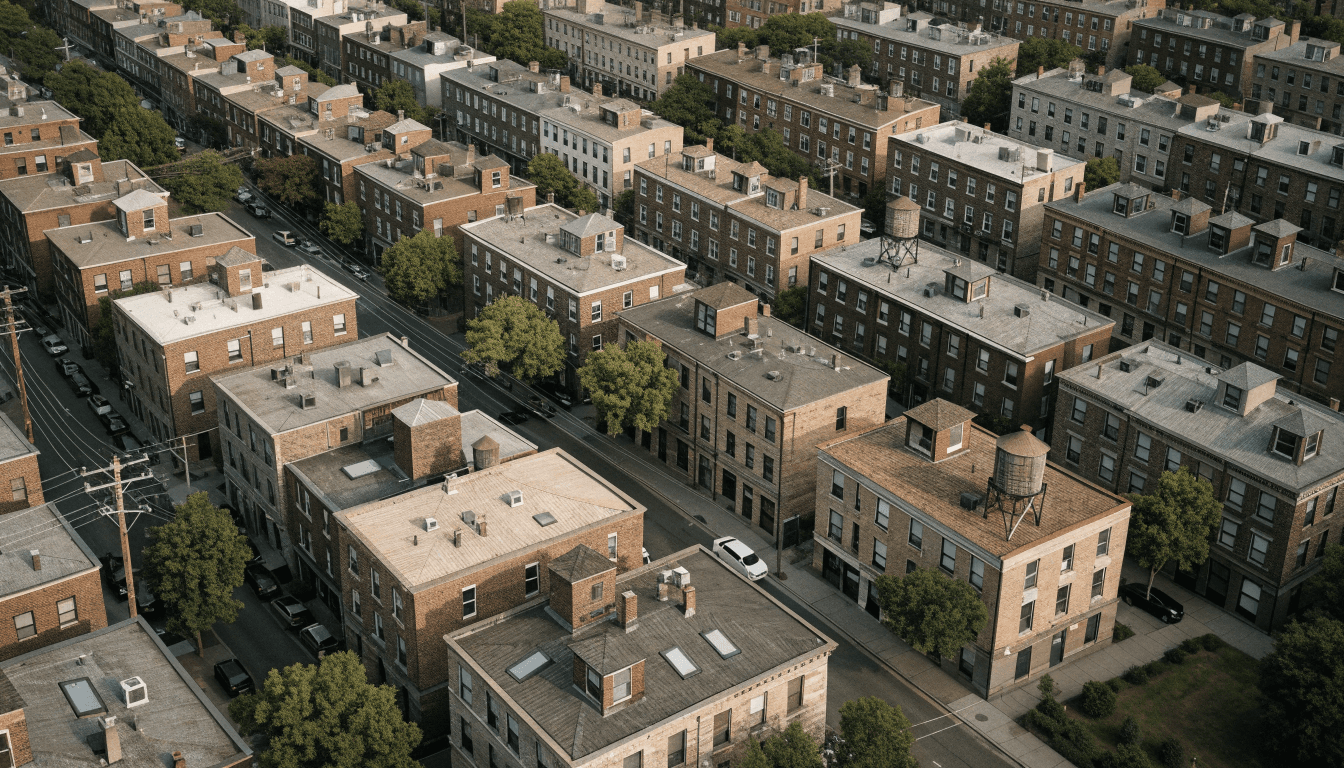
What a zoning district code actually tells you
Every lot in New York City sits inside a zoning district. The district code — something like R6B, C4-3, or M1-2 — is a shorthand for a rulebook. That rulebook controls what uses are allowed (residential, commercial, manufacturing), how tall a building can go, how it must sit on the lot, and — most importantly for evaluating a property — how much floor area can legally exist on that lot.
Take R6B as an example. The "R" means residential. The "6" places it in a medium-density tier. The "B" suffix signals a quality housing district, which triggers specific height and setback rules designed to produce a particular street-wall feel — typically four- to five-story walk-ups or small elevator buildings. Each suffix carries its own dimensional regulations, so R6 and R6B are meaningfully different, not just variations on a theme.
Floor-area ratio: the core number
Floor-area ratio, or FAR, is a multiplier. It expresses how many square feet of floor area are permitted for every square foot of lot area.
The formula is simple:
Buildable square footage = Lot area × FAR
So if a lot is 2,500 square feet and the applicable FAR is 2.0, the maximum allowable floor area is 5,000 square feet. That ceiling applies regardless of how many stories the building has — you could spread those 5,000 square feet across two floors or five, but you cannot exceed the total.
R6B, for reference, carries a base FAR of 2.0 for residential use. A corner lot or a lot with a different configuration may calculate differently, but the core logic holds: lot area times FAR equals the envelope.
Some districts allow bonuses — additional FAR in exchange for things like affordable housing units or publicly accessible open space. Those bonuses are real but conditional, and they involve their own regulatory process.
What 'unused FAR' means
If a building was constructed before current zoning, or if the original developer simply built less than the maximum, the lot may contain unused FAR — sometimes called "air rights" in casual conversation, though that term gets used loosely.
Unused FAR is the gap between what exists and what is allowed.
Example: that same 2,500-square-foot lot with a 2.0 FAR has 5,000 buildable square feet. If the existing building contains only 3,000 square feet of floor area, there are 2,000 square feet of unused FAR sitting on that lot.
That gap can matter in several ways:
- Vertical development: the owner may be able to add floors to the existing structure, subject to structural and landmark review.
- New construction: if the existing building is demolished, a developer can build up to the full 5,000-square-foot envelope.
- FAR transfers: in certain circumstances, unused development rights can be transferred to an adjacent lot under a zoning lot merger — a transaction that requires its own approvals and documentation.
- Valuation: two lots with identical footprints and identical current buildings can have very different values if one has significant unused FAR and the other is built to its limit.
Why this matters when evaluating a property
A building that looks the same from the street can carry a very different development profile depending on its zoning and how much of its allowable FAR has been used.
When underwriting a NYC residential acquisition, the first questions are straightforward: What district is it in? What is the applicable FAR? What does the existing building actually contain? The difference between those last two numbers is the development potential — or the absence of it.
Realtors who understand this math can read a deal faster, ask better questions during due diligence, and communicate more precisely with buyers, sellers, and capital partners. Zoning isn't background information. It is the envelope inside which every financial model gets built.
The takeaway
FAR is the multiplier between a lot's size and its legal ceiling — understanding what's been built versus what's allowed is where real property analysis begins.
Want to see how a real deal screens?
Run a NYC address through the fund's own screening tools — free, from the public record.
Educational content only — not investment, legal, or tax advice, and not an offer of securities. Any offering is made only through the fund's offering documents, which govern in all cases.
← All posts