

News
NYC zoning and FAR: how buildable square footage is calculated
Jul 20, 2026 · Realtors Fund Team
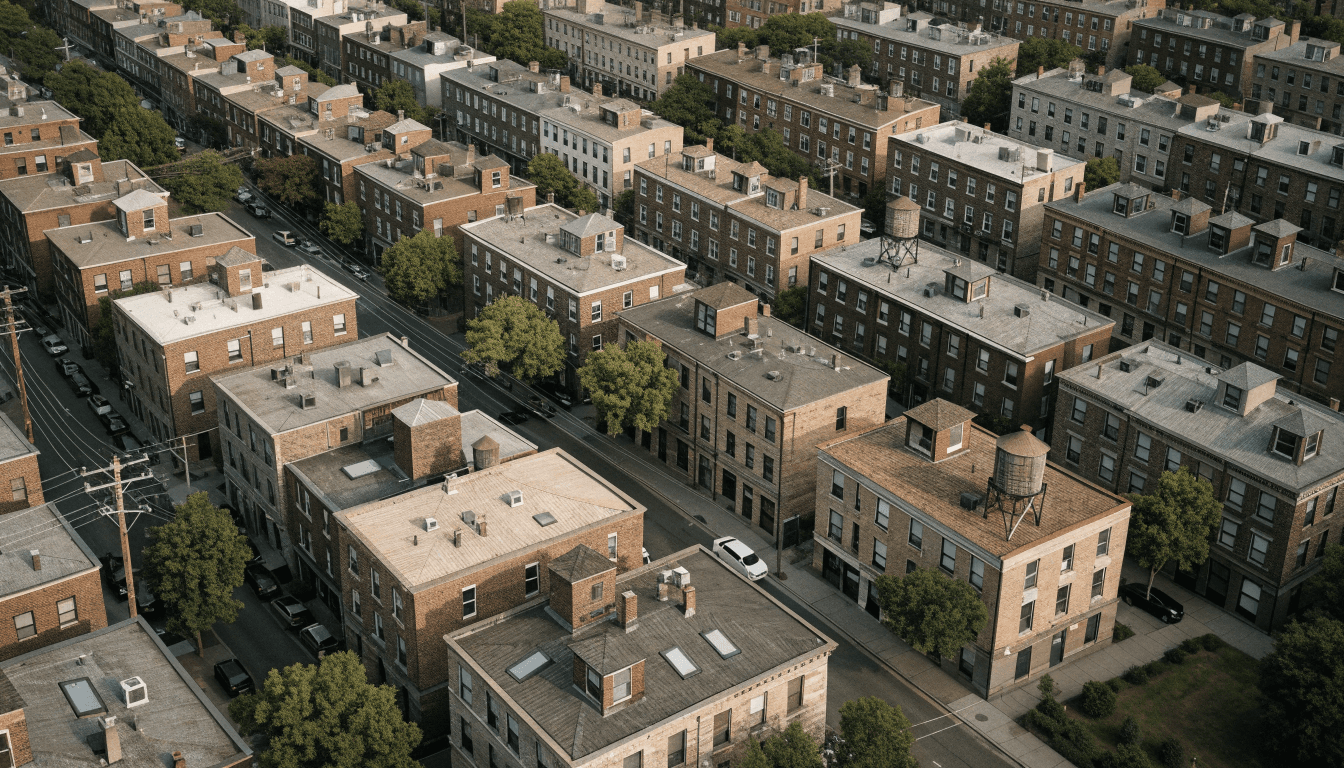
What a zoning district code actually tells you
Every lot in New York City sits inside a zoning district. The district code — something like R6B or R7A — is shorthand for a rulebook that governs what can be built there and how much of it.
The letter tells you the use category. R means residential. C means commercial. M means manufacturing. Mixed districts combine letters.
The number indicates density. Higher numbers generally allow more density. An R3 neighborhood looks like detached single-family houses in Bayside. An R8 neighborhood looks like the mid-rise buildings you see across large parts of the Upper West Side.
The letter suffix — the B in R6B, the A in R7A — refines the rules further. It controls things like setbacks, parking requirements, building height limits, and the specific FAR that applies. Two lots a block apart can carry the same number but different suffixes and face meaningfully different development ceilings.
What FAR means and how it works
FAR stands for floor-area ratio. It is a multiplier that converts lot area into maximum allowable building square footage.
The formula is simple:
Lot area × FAR = maximum buildable floor area
If a lot is 5,000 square feet and the applicable FAR is 2.0, the maximum residential floor area permitted is 10,000 square feet. If the FAR is 3.0, the ceiling rises to 15,000 square feet.
FAR is set by the zoning district. R6B, for example, carries a residential FAR of 2.0. R7A carries a higher FAR. The NYC Zoning Resolution publishes the exact figures for every district, and the Department of City Planning's ZoLa tool maps them lot by lot.
Not all square footage counts the same way. Zoning regulations distinguish between floor area that counts against FAR and space that does not — mechanical rooms, certain cellar areas, and other categories may be exempt. Reading the actual resolution, or working with a land-use attorney, is the right way to confirm what counts for a specific property.
Why 'unused FAR' matters in a deal
Unused FAR — sometimes called development rights or air rights — is the gap between the floor area already built on a lot and the maximum the zoning allows.
A 5,000-square-foot lot zoned at FAR 3.0 permits 15,000 square feet of floor area. If the existing building contains only 7,500 square feet, there are 7,500 square feet of unused FAR sitting on that lot.
That unused FAR has implications in several directions:
- Renovation and enlargement potential. An owner may be able to expand the existing structure vertically or horizontally, up to the zoning ceiling, without a rezoning.
- Air rights transfers. In certain circumstances, unused development rights can be transferred to an adjacent lot, subject to specific eligibility rules. These transfers are complex and require land-use counsel.
- Valuation. Buyers and lenders who understand FAR look at a property differently than buyers who only look at existing square footage. A building at 95% of its allowable FAR has limited upside. A building at 50% of its allowable FAR sits on a different kind of asset.
- Conversion and repositioning analysis. When evaluating whether a property can be repositioned — adding units, converting use, or building a community facility component — FAR is the first number on the whiteboard.
How this shows up in residential acquisitions
For multifamily acquisitions in Brooklyn, Queens, the Bronx, or Upper Manhattan — the boroughs where residential value-add activity is concentrated — FAR analysis is part of every underwriting conversation.
A building may appear fully utilized based on unit count. FAR analysis may reveal meaningful remaining buildable area. The reverse is also true: what looks like a modest building may already sit at or near its zoning ceiling, which limits what a buyer can do with it.
Neither condition is inherently good or bad. The point is that zoning and FAR are inputs, not conclusions. They define the range of what is physically and legally possible on a given lot before any business decision is made.
For realtors representing buyers or sellers of development-eligible properties, being conversant in FAR — not just knowing the term, but being able to read a ZoLa output and explain what it means — is a material service to clients.
The takeaway
FAR translates lot area into buildable square footage, and the gap between what exists and what the zoning allows is often the most important number on a site.
Want to see how a real deal screens?
Run a NYC address through the fund's own screening tools — free, from the public record.
Educational content only — not investment, legal, or tax advice, and not an offer of securities. Any offering is made only through the fund's offering documents, which govern in all cases.
← All posts